Michelin Plaque
 AA 1 Rosette
Winter is when the fish is firmest and the shellfish sweetest.
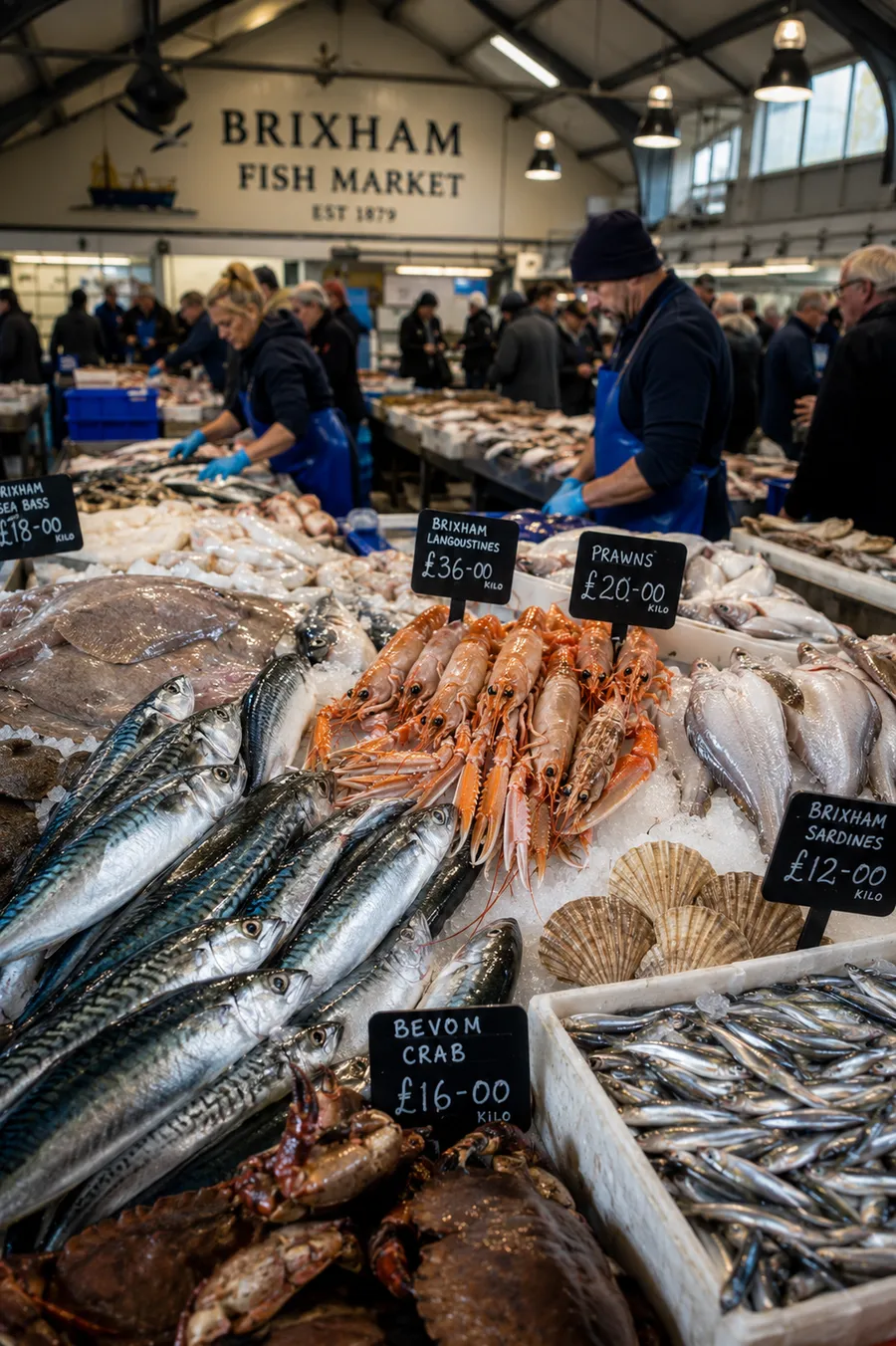
The menu at The Galley is written each morning around what lands at Brixham and Newlyn — more on how our fish gets here. Through the winter the boats are chasing cold-water species, and the cold does the fish a favour: the flesh firms up, the shellfish fills out. This is the winter chapter of our fuller Devon seafood calendar — here is what we reach for from December to February.
What seafood is best in Devon in winter?
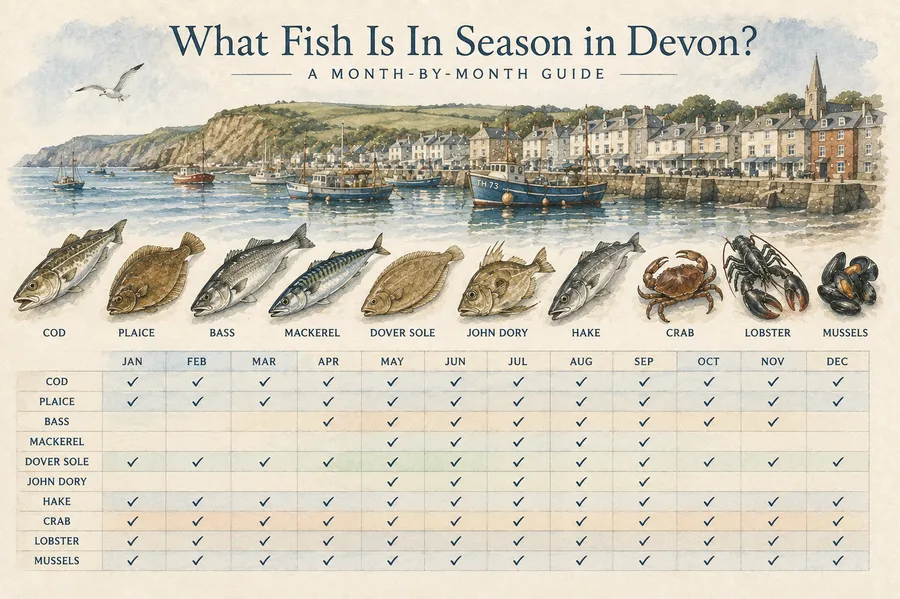
From December to February the standouts on the South Devon coast are hand-dived king scallops, turbot and brill, Dover sole, native oysters and Exe Estuary mussels, with langoustine when the inshore boats are running. Brown crab and native lobster, both summer shellfish, are rested until the water warms again.
Hand-dived king scallops
Scallops are at their peak from October through to spring, the roe full and the meat firm. Ours are hand-dived off the South West coast rather than dredged, which spares the seabed and keeps the shell clean — the difference from a frozen, water-logged scallop is night and day. Seared hard, served with something sharp to cut the sweetness.
Turbot and brill
The big flatfish are at their best in the cold months. Turbot is the one fish that can carry a serious white Burgundy — see the wine list — dense, sweet, and worth the premium. Brill is its quieter cousin: a little softer, a little cheaper, and no worse for it.
Dover sole
A cold-water fish at its best from November to April, firmer and more pronounced than lemon sole. It is one of the few fish where the classic preparation — meunière, on the bone — is also the best one. On the menu when the Brixham boats have worked the right ground.
Exe Estuary mussels and native oysters
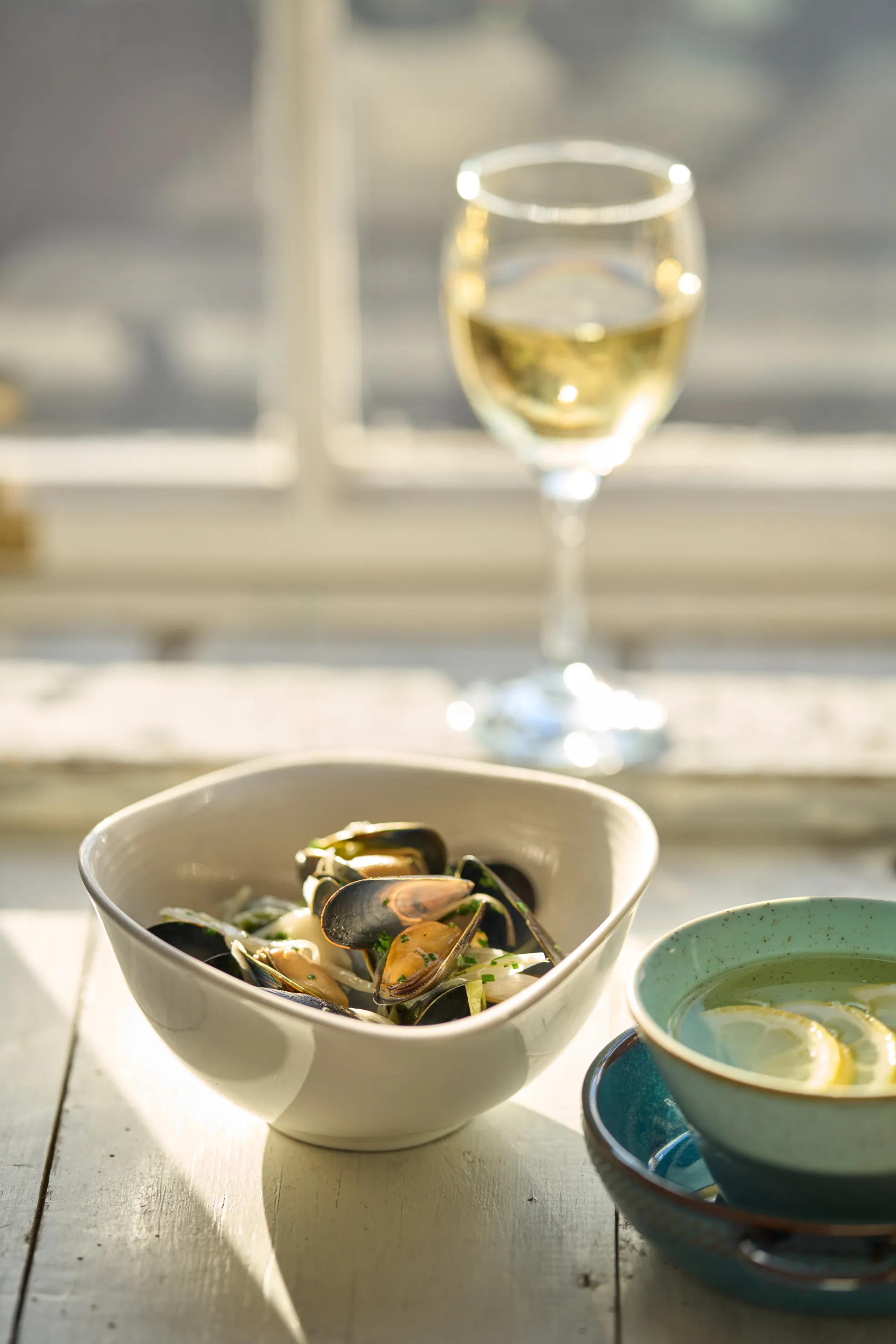
Both come into their prime as the year cools. The Exe mussels are small and intensely flavoured, plumpest through the R months from September on. The native oysters — from one of the few native beds still working in England — run September to April. We use rock oysters year-round too, but the native season is the one worth catching.
Langoustine
Live, whole langoustine — Dublin Bay prawns — is a winter-and-spring species in this stretch of the channel, and a different animal from the frozen scampi tails most people know: sweeter and firmer, and best eaten simply. It appears as a special when the inshore boats are running.
How the winter menu changes
Winter fishing is weather-dependent. A run of storms keeps the boats in, and the menu is rewritten around whatever did land. That is the point of cooking this way: the fish on the plate is whatever was best in the market that morning, not a fixed card printed weeks ahead. It also means the kitchen leans on the species that thrive in the cold and rests the ones that don’t. For a winter weekend, book ahead — the dining room is small.
Frequently asked questions about winter seafood in Devon
What seafood is in season in the UK in winter?
Winter is prime time for cold-water species. Hand-dived king scallops, turbot, brill and Dover sole are at their firmest from December to February; mussels and native oysters are in their September-to-April prime; and langoustine runs through winter and into spring. Summer shellfish like native lobster and brown crab are largely out of season and eat better left until the water warms.
Is winter a good time to eat seafood in Devon?
Yes — arguably the best time. Cold water firms the flesh of flatfish and fills out shellfish, so scallops, turbot and Dover sole eat better through the winter than at any other point in the year. A restaurant sourcing daily from Brixham will have something excellent on the menu right through the season.